VAT included for EU orders.
Shipping calculated at checkout.
Couldn't load pickup availability
Specs
Model
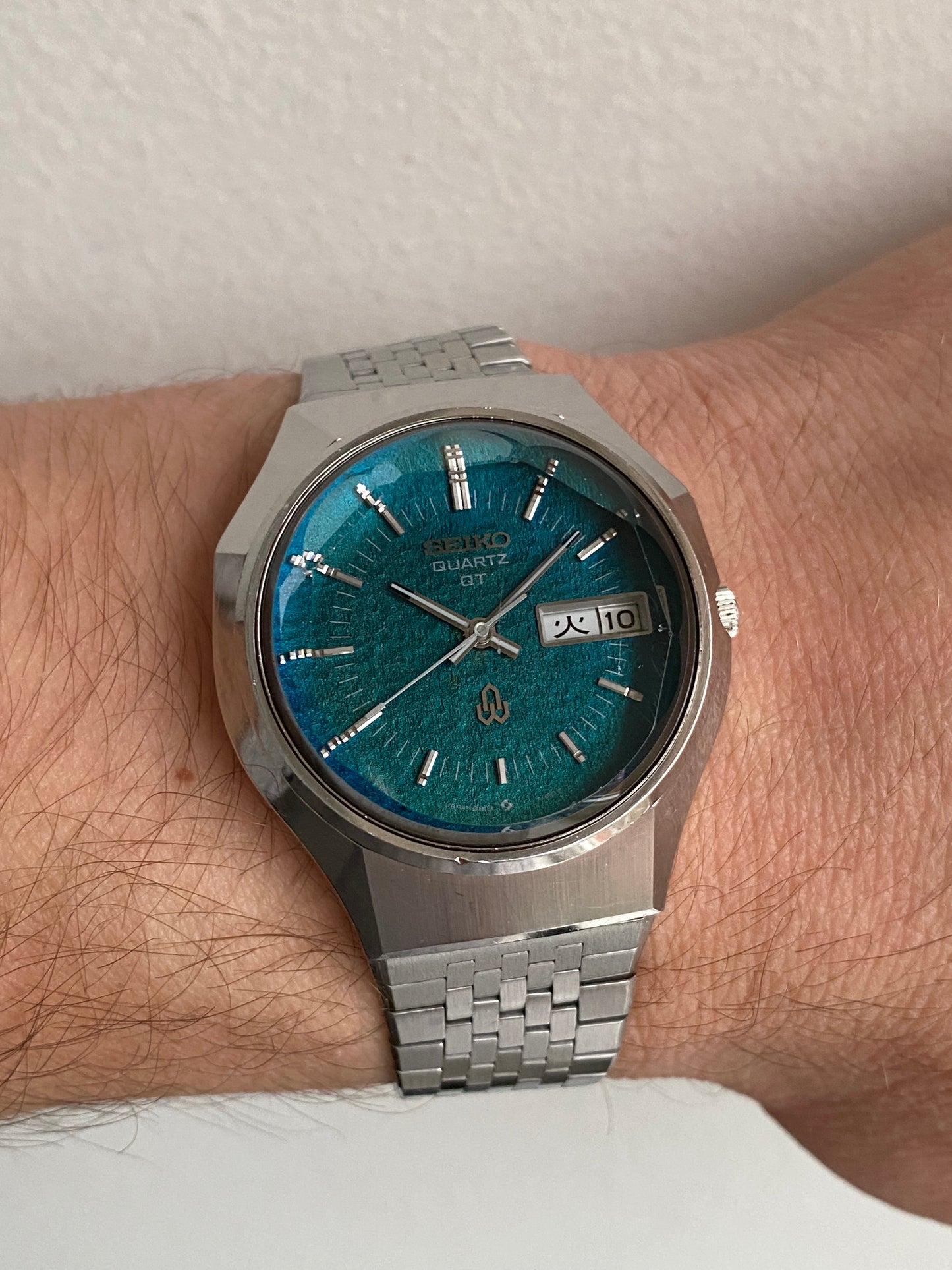
Seiko QT ‘Baby Morpho’
Reference
3803-7080
Year
1973
Movement
Quartz
Dial
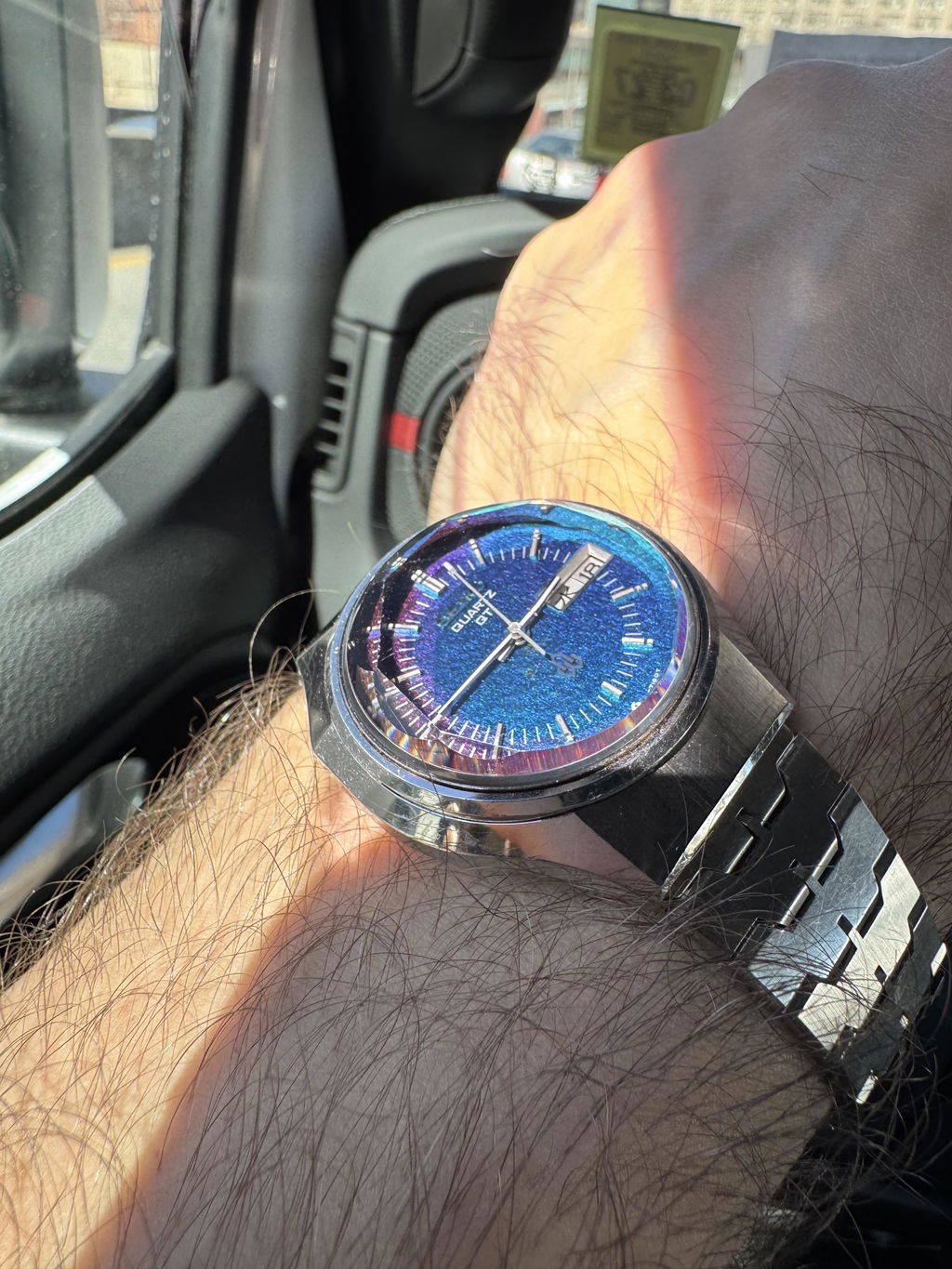
Blue Morpho
Case size
38mm
Lug width
18mm
Service
Fully Serviced (December 2025)
Condition
Very good
Warranty
3 months
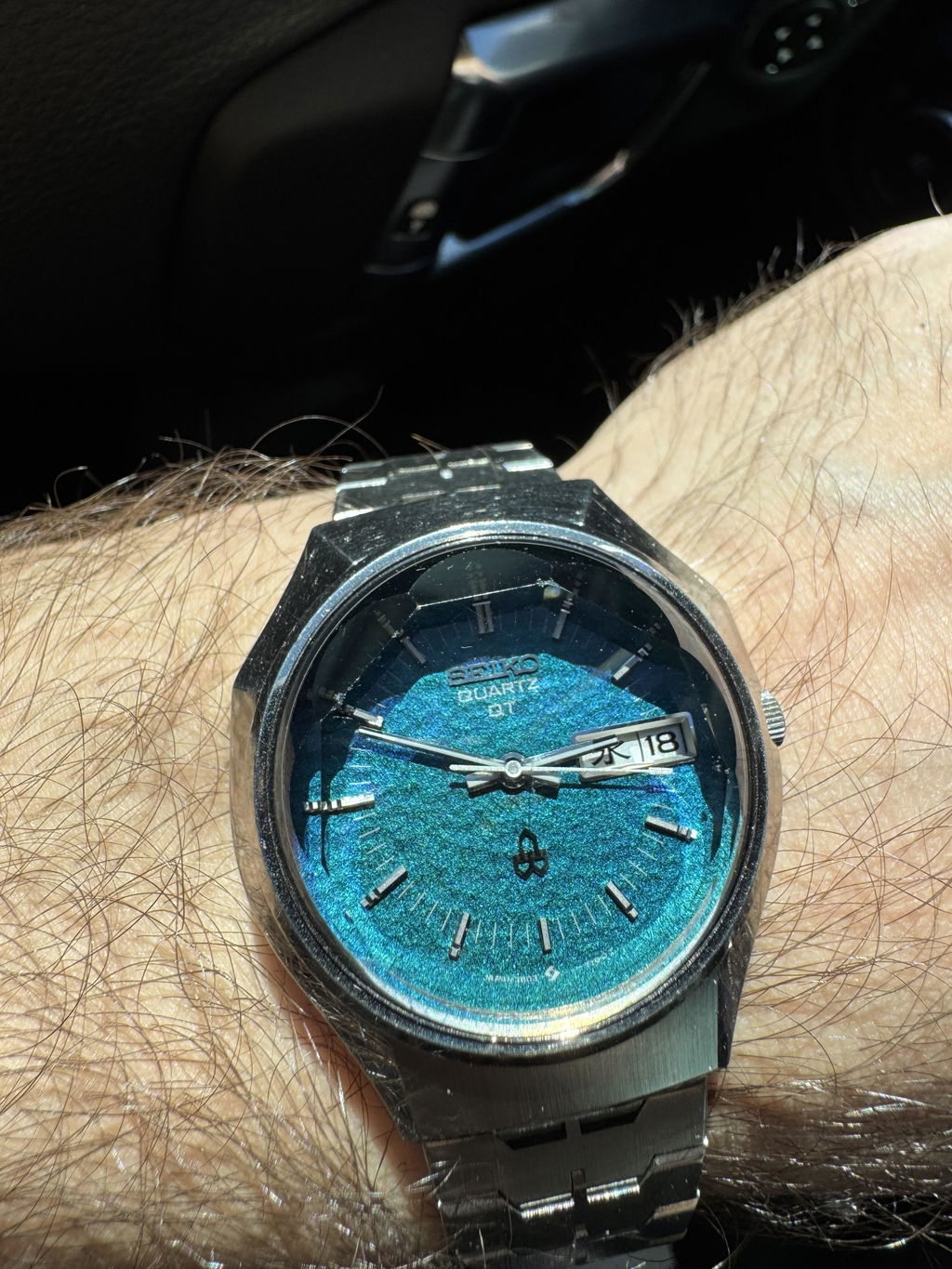
The watch This captivating Seiko 3803-7080, known as the 'Baby Morpho', is a true 70s icon. Its legendary iridescent dial shifts magically from deep blue to vibrant green under different light. The dial draws inspiration from the wings of the Morpho butterfly, creating a hypnotic effect enhanced by the dramatic faceted crystal.
The watch is in very good original condition with an honest, unpolished case showing only light signs of careful wear over its 50+ years. The faceted crystal has some light scratches, with the most noticeable near the center. It comes fitted with a period-correct King Quartz bracelet, which fits the case shape and design perfectly. The day can be displayed in Japanese Kanji and English.
The watch was fully serviced by a professional watchmaker in December 2025. The service included complete disassembly, cleaning, lubrication and reassembly.
This piece is a rare and undervalued gem compared to its 'big brother' the Superior Morpho. It offers wearable vintage art with one of Seiko's most extraordinary dials ever made.
The quartz crisis The "quartz crisis" was a major turning point in the watch industry during the 1970s and 1980s, driven by the rise of quartz technology. Companies like Seiko led the way, offering watches that were more accurate, more affordable, and easier to maintain than traditional mechanical models.
With the launch of the first quartz wristwatch, the Astron, in 1969, Seiko showed the world what quartz could achieve. Swiss watchmakers, known for their mechanical craftsmanship, were slow to react and lost much of their market share. The crisis forced the Swiss industry to restructure and helped shape a future where traditional watchmaking and modern quartz innovation could exist side by side.
Best seller to date! Went above and beyond and shipping was super fast to the USA
Best seller to date! Went above and beyond and shipping was super fast to the USA. Will definitely be a customer again - item was better than described.