Skip to product information
1 of 21

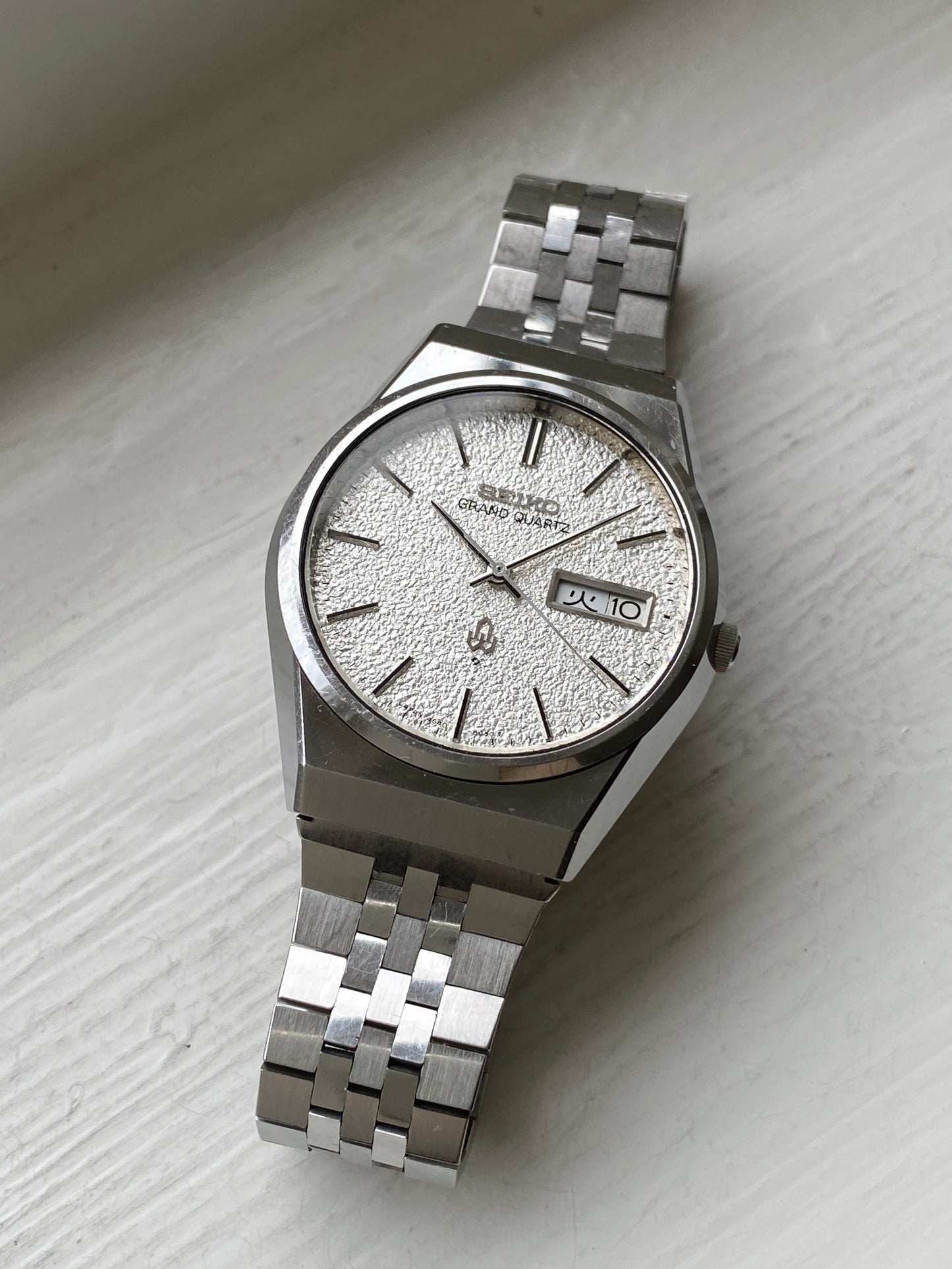
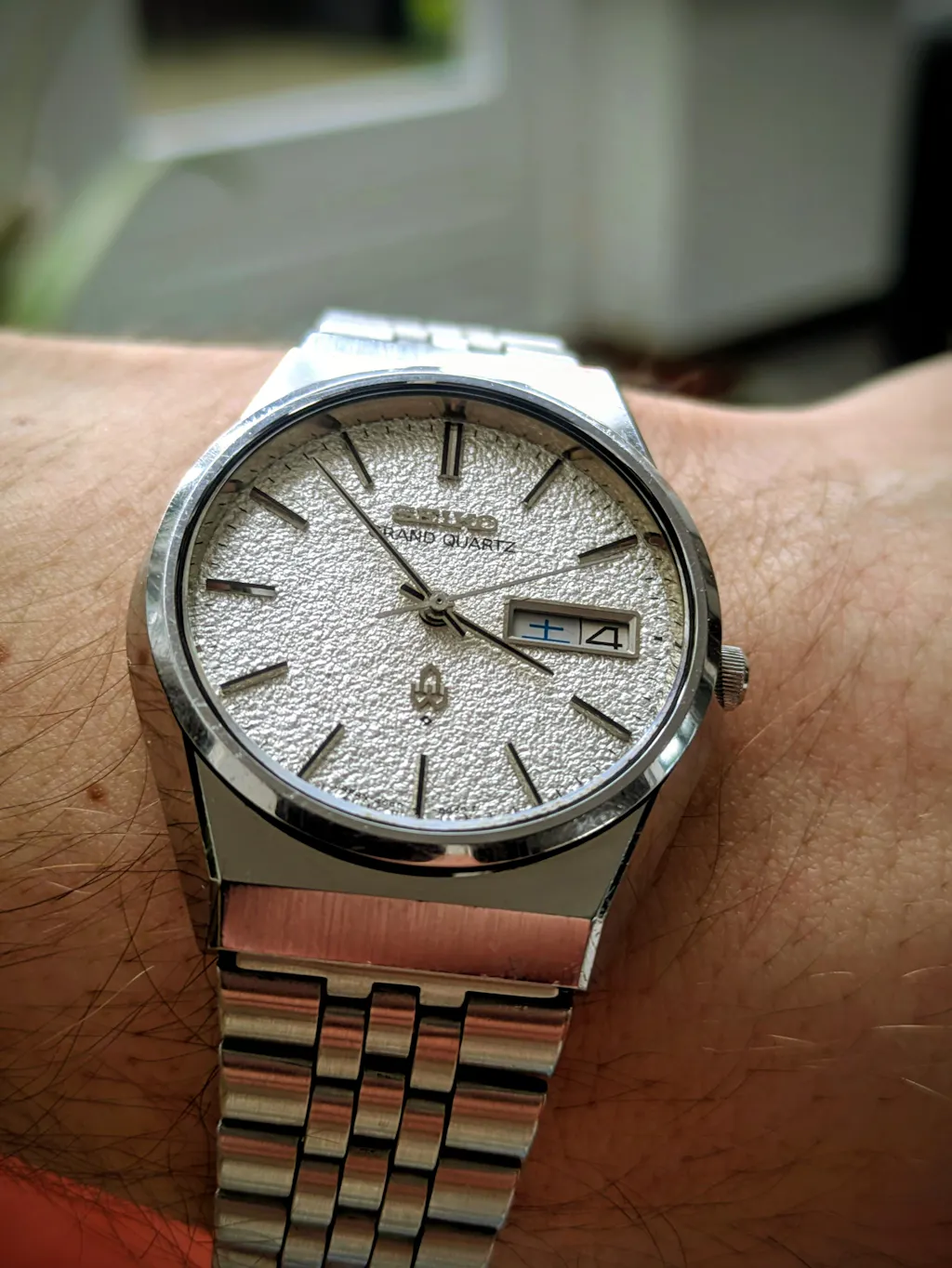
Seiko Grand Quartz 4843-8100

Seiko Grand Quartz 4843-8100

Regular price €475,00 EUR
Regular price Sale price €475,00 EUR
Sale Sold out
VAT included for EU orders.


 Brand

 Seiko

 Model

 Grand Quartz

 Reference

 4843-8100

 Year

 1977 - June

 Movement

 Quartz

 Extras

 New battery (November 2025)
 New battery hatch gasket

 Dial

 Diamond Dust / Snowflake      

 Jewels

 7

 Case

 36mm

 Lugs

 18mm

 Day/date

 Day and date

 Crystal

 Sapphire

 Strap

 Fits up to an 18,5 cm wrist

 Performance

 ±5 seconds per month

 Box&papers

 Not included         

 Condition

 Very good


The watch
This exact reference was one of the very first watches we sold after our launch, and we’re pleased to have another example back in the collection. The case shows light signs of wear consistent with age, but the dial is in mint condition and the original sapphire crystal remains scratch-free. The day display can be set to either Japanese Kanji or English.

The bracelet didn’t originally come with this model, but it’s from the same era and suits the watch perfectly, featuring two polished center links that complement the case design.

Additional information
The case is made of hardened stainless steel, giving it a specific type of finish and extra resistance against scratches.

The 4843 movement was developed by Seiko’s Suwa division, introduced in 1974 along with the King Quartz 4823 and the higher-end 4883 superior. Its accuracy is rated at ± 5 seconds per month, which were phenomenal specs for the 70’s.

The quartz crisis
The "quartz crisis" was a major turning point in the watch industry during the 1970s and 1980s, driven by the rise of quartz technology. Companies like Seiko led the way, offering watches that were more accurate, more affordable, and easier to maintain than traditional mechanical models.

With the launch of the first quartz wristwatch, the Astron, in 1969, Seiko showed the world what quartz could achieve. Swiss watchmakers, known for their mechanical craftsmanship, were slow to react and lost much of their market share. The crisis forced the Swiss industry to restructure and helped shape a future where traditional watchmaking and modern quartz innovation could exist side by side.

View full details