VAT included for EU orders.
Shipping calculated at checkout.
Couldn't load pickup availability
Specs
Model
Seiko Quartz
Reference
7830-8010
Year
1978
Movement
Quartz
Dial
Honeycomb
Case size
34mm
Lug width
18mm
Bracelet
XGA620
Wrist size
Fits most wrist sizes
Condition
Excellent
Warranty
3 months
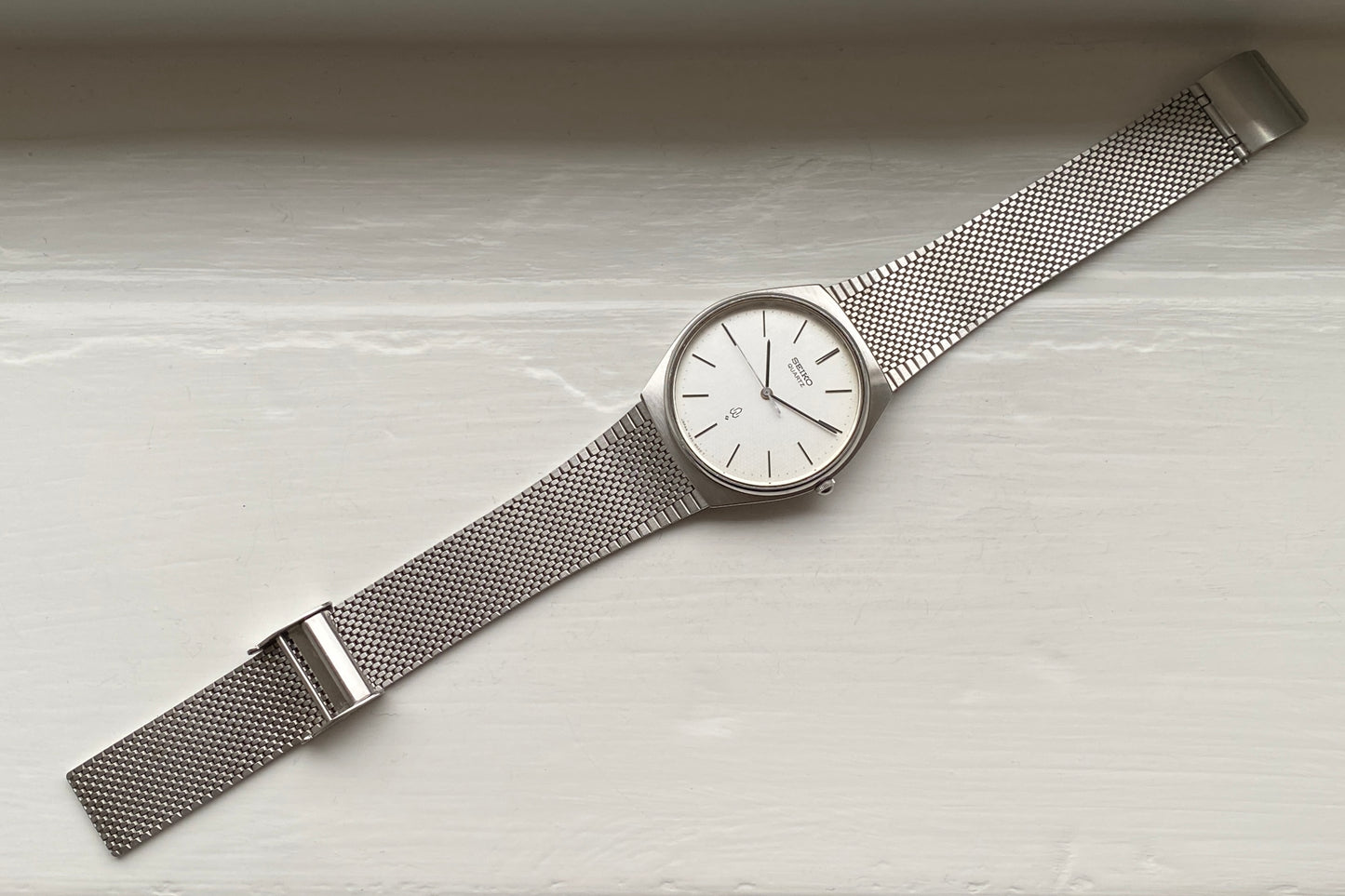
The watch Seiko Quartz 7830-8010 in very clean condition. The dial is what makes this one. Silver at first glance, but with a fine textured surface that gives it a soft grain, almost like a field of tiny dots when the light hits it. It’s subtle, but it gives the watch a bit of life without taking away from the simplicity.
Applied markers and thin hands keep everything clear and balanced. No date to keep it minimal.
The case still has sharp lines and hasn’t been polished. It sits well on the wrist, especially on the original style Milanese bracelet which fits the watch naturally. It can easily be adjusted to fit most wrist sizes.
An honest late 70s Seiko. Nothing exaggerated, just a well-kept piece with a dial that’s a bit more interesting than most.
The quartz crisis The "quartz crisis" was a major turning point in the watch industry during the 1970s and 1980s, driven by the rise of quartz technology. Companies like Seiko led the way, offering watches that were more accurate, more affordable, and easier to maintain than traditional mechanical models.
With the launch of the first quartz wristwatch, the Astron, in 1969, Seiko showed the world what quartz could achieve. Swiss watchmakers, known for their mechanical craftsmanship, were slow to react and lost much of their market share. The crisis forced the Swiss industry to restructure and helped shape a future where traditional watchmaking and modern quartz innovation could exist side by side.